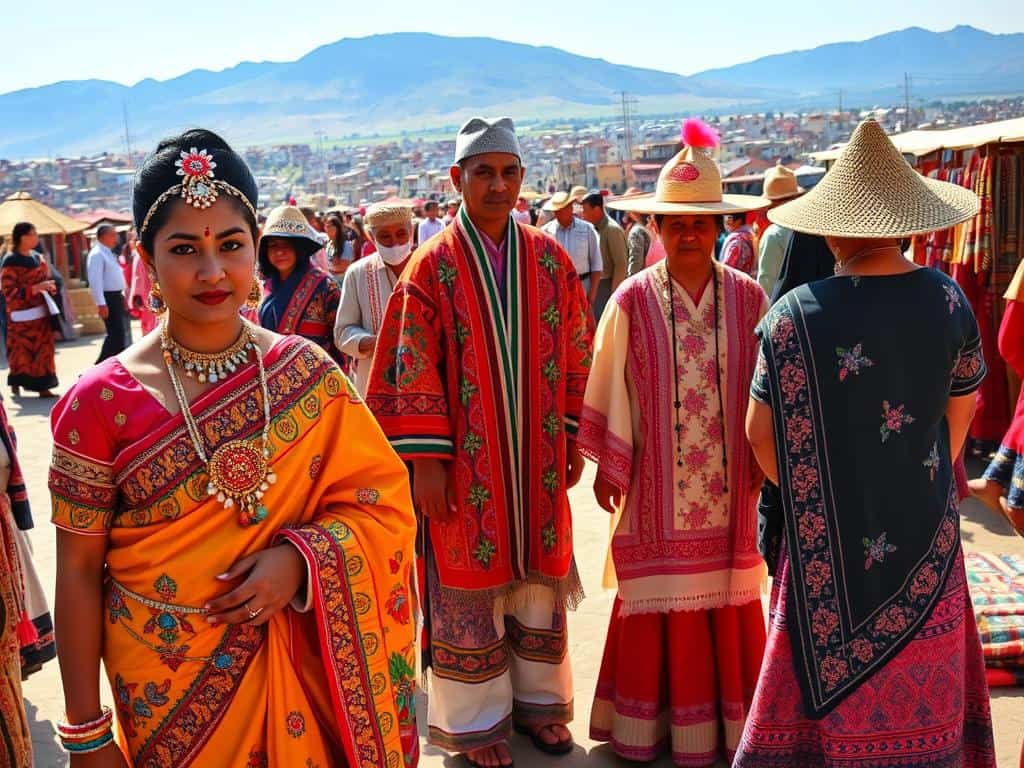
Wearing a vibrant sari in Mumbai’s busy streets made me think deeply. These clothes are not just fabric. They are a mix of heritage, history, and creativity. Traditional outfits mean more, showing the wearer’s social place and cultural story. They tell tales passed down through generations. By diving into traditional fashion, we learn and celebrate the world’s diverse cultures together.
Key Takeaways
- Traditional attire reflects the cultural identity of communities.
- Cultural fashion plays a significant role in storytelling and heritage.
- Exploring ethnic wear enhances our understanding of global diversity.
- Each garment represents unique craftsmanship and history.
- Fashion history is intertwined with cultural expression.
The Beauty of Cultural Fashion
Exploring cultural fashion shows us the deep stories and identities behind traditional costumes. I’ve learned that these clothes are more than just items to wear. They are a history, culture, and values woven into society. They keep heritage alive, with each piece telling its own story. This makes wearers feel proud of their history and traditions.
Looking at ethnic wear worldwide, it’s clear it connects cultures. Traditional garments inspire fashion designers everywhere, bringing unique styles to global fashion. They go beyond borders, blending with modern trends but keeping their essence. This mix shows how traditional clothes can grow in today’s fashion world. They keep their meaning while becoming part of the fashion change.
Featured Traditional Attires
Exploring traditional fashion shows the deep cultural heritage and diversity. The elegant sari of India and the detailed Japanese kimono are just examples. I’m intrigued by how these attires show the essence and values of their cultures.
The Elegant Sari of India
The elegant sari is a key piece of Indian fashion. It’s versatile and rich in cultural heritage. With vibrant colors and intricate embroidery, each sari is unique. It reflects the wearer’s personality.
Scottish kilts symbolize national pride with their plaid patterns. They’re worn at cultural events like the Highland Games. Each kilt has a story, connecting wearers to their Scottish roots.
The Versatile Kaftan of West Africa
In West Africa, the kaftan is known for being loose and colorful. It’s comfortable yet elegant, expressing personal style and cultural identity. The kaftan celebrates individuality.
Complexity of the Kimono in Japan
The Japanese kimono is complex and stylish. It’s crafted with care and comes in many styles. Symbolic designs make it special for ceremonies and represent Japan’s culture. Each kimono has a meaning, often of good fortune and prosperity.
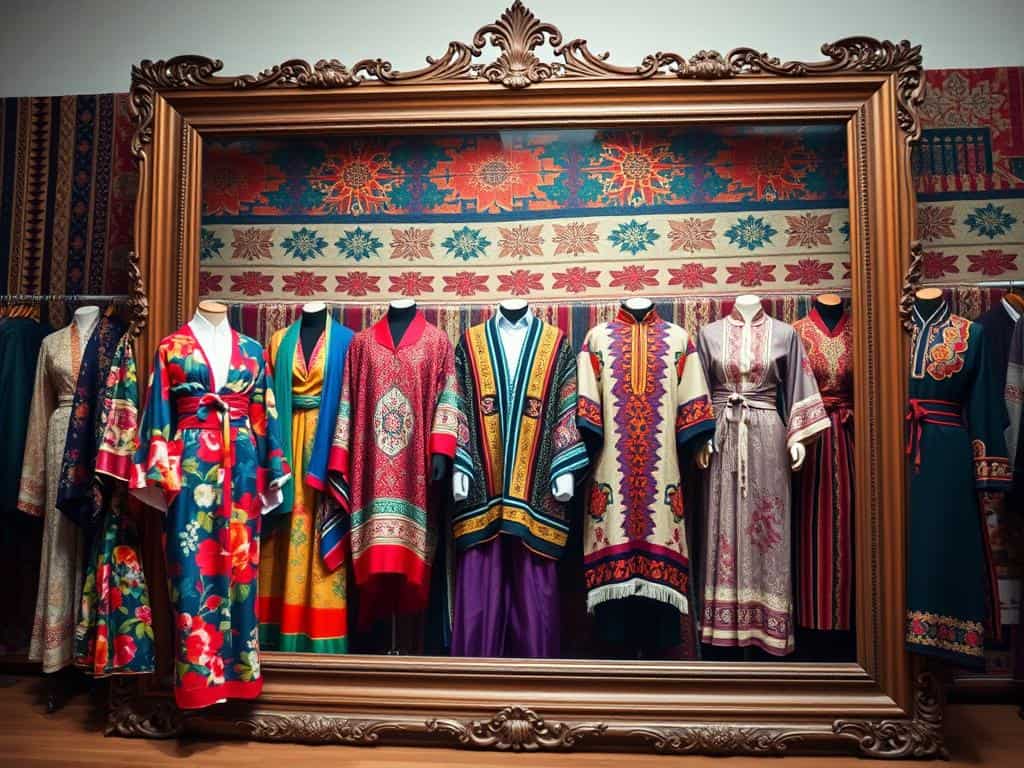
Diverse Styles from Across Continents
There is a beautiful variety in traditional clothes from different continents. Each piece shows the unique culture and history of its place. These styles are rich with history.
Balinese Temple Dress in Indonesia
The Balinese dress dazzles with complex patterns and bright colors. It’s worn at important events and shows Bali’s spiritual and artistic side. The effort to make these clothes highlights their cultural value.
Maasai Attire from Kenya
Maasai clothing is famous for its bright red and detailed beadwork. It stands for wealth, status, and community bonds. Wearing it ties one to the Maasai’s deep culture, showing pride and identity.
The Vibrant Herero Dress of Namibia
The Herero dress is unique with its Victorian look and special shape. It has horn-shaped hats, showing Herero women’s resilience and pride. Every part tells a story of heritage and strength.
Sámi Traditional Clothing from Lapland
Sámi clothes come from Lapland’s indigenous people, celebrated for vivid colors and durable materials like reindeer skin. This wear links to the Sámi’s historic roots and their bond with nature.
Conclusion
Looking back at the traditional fashion styles in this article shows they’re more than clothes. They are a lively way to share cultural heritage and identity. Each piece, like the elegant sari or the colorful Herero dress, tells stories. These stories are meaningful to the communities that wear them. By valuing cultural fashion, I connect more with global culture.
The journey through various styles shows how traditional clothes influence modern fashion. They also connect us to our past. These clothes build connections within and across cultures. This enhances our understanding and respect for each other. Fashion is a unique language that tells us about heritage and human experience.
Respecting these traditions leads to a more inclusive, culturally aware society. My fashion journey is about celebrating cultural expression’s beauty and complexity. Every traditional fashion piece is an invitation. It encourages us to discover the human experience and connect with our heritage and the wider world.