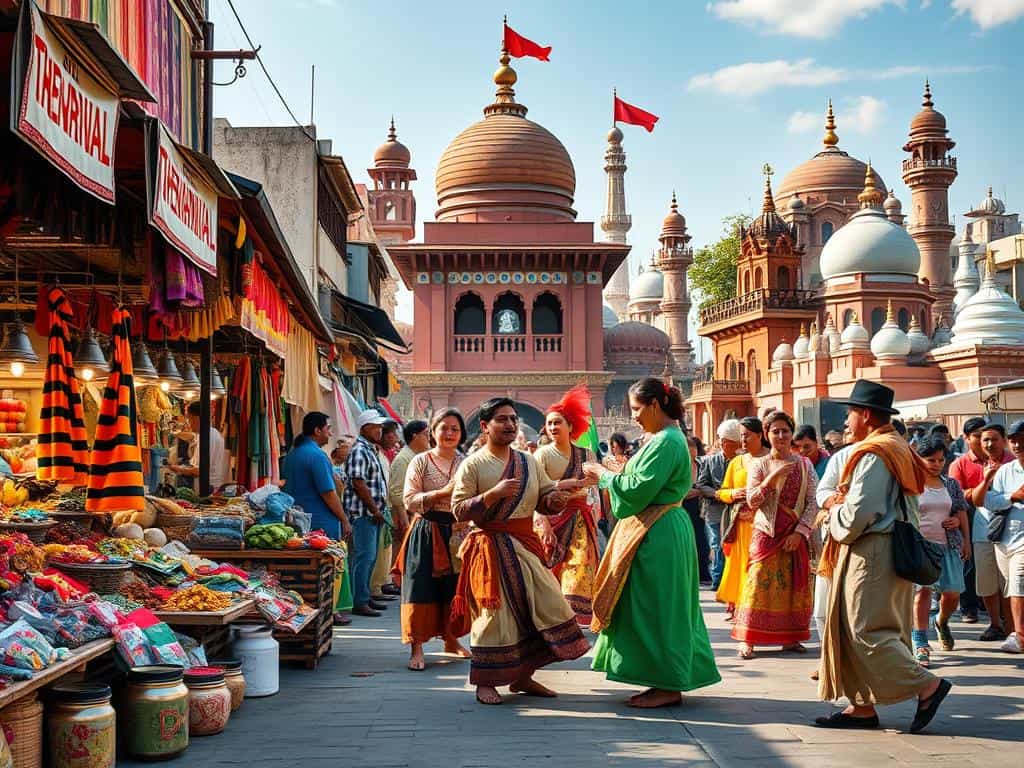
Traveling opens our eyes to humanity’s quirks, especially in local traditions. At a festival in Spain, locals threw tomatoes at each other in La Tomatina. It was a sight to see. This celebration showed me how strange customs can be at a community’s heart. They highlight shared history and beliefs.
From rituals in distant lands to quirky annual festivals, these traditions show our global heritage. Each one reminds us that, despite our differences, we often share the same values. They let us feel connected on a human level.
Key Takeaways
- Global traditions reveal cultural diversity and shared humanity.
- Unique celebrations often stem from historical roots.
- Rituals like La Tomatina showcase joy and community spirit.
- Understanding strange customs can enhance our appreciation for different cultures.
- Every tradition tells a story about its people and their heritage.
Unique Cultural Celebrations That Defy Expectations
Around the world, there are celebrations with unexpected, quirky customs. These traditions help communities share their values and spirit. They show the rich variety of cultural ways, with each having a unique take on life and connection. Here are some examples that show unusual rituals can surprise and delight us.
La Tomatina in Spain
Every August, Buñol turns into a lively place for La Tomatina. People throw ripe tomatoes at each other in this event. It’s a fun way to bring together locals and visitors, creating joy and unity. Started in the 1940s, it highlights the local culture. It focuses on fun, not competition.
Finger Cutting in Indonesia
In Indonesia, the Dani tribe has a unique way of mourning called finger cutting. It’s when they cut off a finger to show sadness for someone who died. This ritual helps them feel connected to their ancestors and the spirit world. It shows their deep sadness and respect for the deceased.
Baby Jumping in Spain
In Spain, there’s a tradition called Baby Jumping during San Juan’s feast. Men dressed as devils jump over babies on mattresses. This odd ritual aims to wash away sin and protect the kids from evil spirits. It’s a bold way for cultures to combine celebration and ceremony, showing their unique beliefs and values.
Local Traditions That Showcase Resilience and Community
Exploring local traditions shows how community rituals reflect resilience across cultures. Each practice tells a story, linking people with shared values. These cultural practices highlight each community’s uniqueness and the power of unity.
Triggering the Cheese-Rolling Tradition in England
The Cheese-Rolling event in Gloucestershire, England, is thrilling. People chase a cheese wheel down a steep hill. This tradition shows the community’s determination and teamwork.
Despite the risks, the excitement brings everyone together. It’s a mix of fun and bravery. Watching this, I admire the local spirit kept alive by such traditions.
Sky Burials in Tibet
In Tibet, sky burials are a deep cultural practice. They show the connection between life and nature. The deceased are offered to vultures, symbolizing life’s cycle.
This ritual honors the dead, showing beliefs in life, death, and rebirth. Through this, the community displays resilience and respect for nature.
Blackening the Bride in Scotland
The Scottish tradition of Blackening the Bride is both funny and meaningful. Friends and family cover the bride with dirt, sauces, and more. This ceremony celebrates friendship and support as the bride starts a new chapter.
It shows how cultural practices can create a strong community and joy. It strengthens the bonds between people.
Curious and Unconventional Customs from Around the Globe
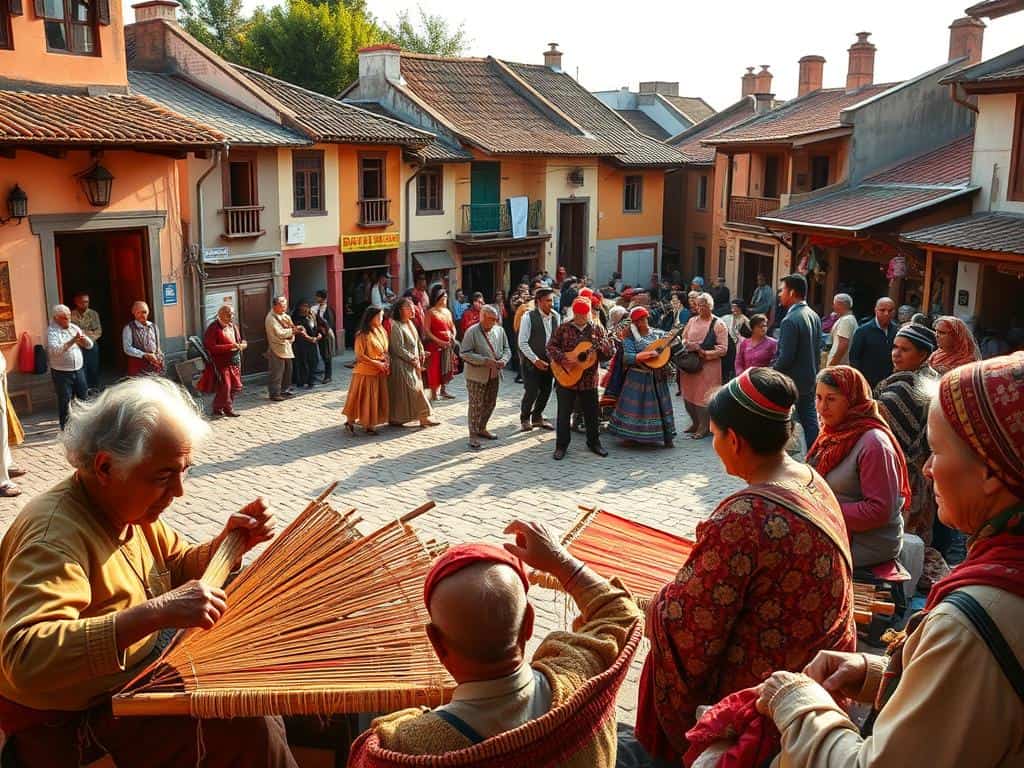
All over the planet, there are unusual traditions that shine a light on what makes different communities special. These traditions are more than just interesting. They show us the values and beliefs of societies around the world. This helps us see how rich and diverse our global heritage is.
Nagoro Doll Village in Japan
In a small village in Japan called Nagoro, a fascinating sight awaits visitors. Life-sized dolls represent people who used to live there but have since moved away or passed on. It’s a bit spooky but also deeply moving. The dolls stand in for the lost villagers, reminding everyone of the community’s history.
The dolls are everywhere—in homes, on streets—making the whole place feel like a museum about the village’s past. It’s a unique way to remember and honor those who were once a vital part of Nagoro. This custom shows the deep bond between the people and their hometown.
The Monkey Buffet Festival in Thailand
In Thailand, there’s a wild celebration known as the Monkey Buffet Festival. It takes place in Lopburi, a province famous for its large monkey population. Locals put together a huge feast of fruits and vegetables just for the monkeys. It’s their way of showing respect and care for these animals.
This unusual fest brings people and monkeys together in a fun and respectful way. It highlights the villagers’ efforts to live in harmony with nature and protect their local environment. For those who join in, it’s an unforgettable experience that showcases a unique aspect of Thai culture.
Burning the Devil in Guatemala
In Guatemala, there’s a powerful tradition known as Burning the Devil. Families gather to get rid of negative vibes and bad luck from their homes. They do this by cleaning out their houses and then burning effigies of the devil. It’s a symbol of getting rid of the old and starting fresh.
This dramatic ritual is about purification and renewal. By setting the devil effigies on fire, people believe they are clearing the way for a positive new beginning. It’s a vivid example of how important traditions are in our lives. And how they connect us to our shared global heritage.
Conclusion
Exploring these unique traditions has shown me the incredible diversity in world cultures. Each custom provides a look into different cultural identities and values. This shapes societies everywhere.
Understanding these practices deepens my respect for humanity’s rich experiences. Celebrating local traditions shows how different cultures bond and communicate. It brings people from various backgrounds closer, encouraging deeper connections.
The joy of heritage celebrations lies not just in the customs but also in the stories they tell. In embracing this diversity, I’m eager to learn more about different traditions. It enriches my view of the world and sparks excitement to discover more.