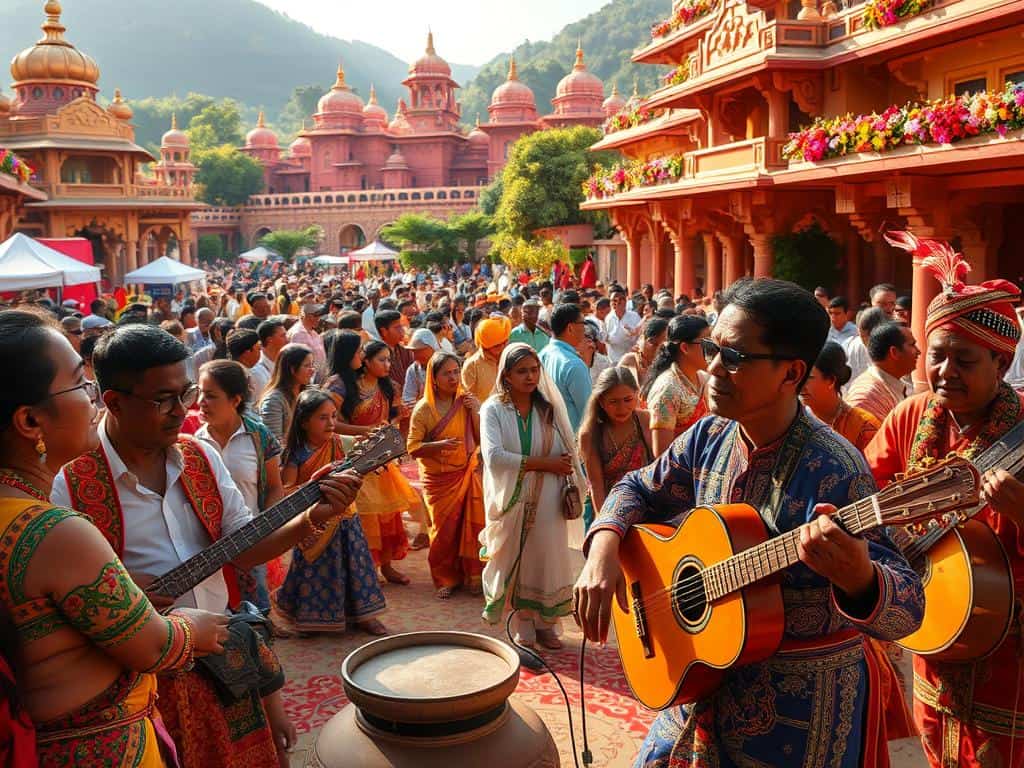
Thinking back to family get-togethers, my grandparents’ old records always play in my mind. Their melodies whisper tales of our heritage, linking me to a rich lineage. Music and culture are deeply connected, shaping our shared identity and showing who we are.
Folk songs by a campfire or the electric buzz at festivals tell of values and experiences beyond words. Music isn’t just fun; it’s a core strand that ties our pasts, highlighting our bonds and our place in the world. Through exploring music’s journey, we see it as a vivid channel for expressing and forming cultural identity.
Key Takeaways
- Music is a form of cultural expression that reflects our identities.
- Every culture has unique sounds and musical heritage that tell its story.
- Music influences and mirrors societal changes over time.
- Melodies and rhythms serve as universal languages across cultural divides.
- Exploring music deepens our understanding of cultural identity.
Historical Context of Music in Culture
Music has always been closely tied to culture. It shows how societies connect and shape their identities. Early tunes set a stage that echoes even today. This shows how music is a shared language.
Early Human Societies
Music brought early people together. It was key in rituals and social events, building unity. Finds like flutes and drums show music’s big role back then. These traditions helped form strong community bonds.
Ancient Civilizations
As societies grew, music’s role expanded in education and civic life. Ancient Greek leaders like Plato and Aristotle saw its deep impact. It went beyond entertainment. It molded personal and cultural views. In China, music was seen as crucial for balance and leadership. It was part of both holy ceremonies and everyday life. This shows music’s role in bringing societies together.
Music as a Reflection of Cultural Identity
Music has always been a strong way to show cultural identity. From folk tunes to religious songs and national anthems, music tells the unique stories and values of people all over the world.
Traditional Folk Music
Traditional folk music is a colorful display of cultural expression. It shares the histories and lives of different communities, keeping their traditions and stories alive for the future. Instruments like the banjo in American music or the djembe in African traditions create a rich sound. This sound shows local pride and identity.
Religious and Sacred Music
Religious music is key in the spiritual life of many people. It adds deep meaning to gatherings and rituals. Songs like spirituals in African American communities and Gregorian chants in the Catholic Church share deep beliefs and experiences. They help keep the culture’s identity strong.
National Anthems and Patriotism
National anthems express pride in one’s country through music. Songs like “The Star-Spangled Banner” make people feel united and belong to something bigger. They remind us of our shared history of sacrifices and victories.
Music and Culture: A Catalyst for Change
Throughout history, music has shown the spirit of its era through various movements. The Renaissance and Baroque periods brought new musical ideas. Composers like Bach and Vivaldi led the way, reacting to changes in society and changing music itself.
The Renaissance and Baroque Periods
The Renaissance sparked a time where art and music celebrated humanism and the individual. This period inspired creativity that changed music and the wider culture. The Baroque era then enhanced musical forms, making the connection between music and listeners more emotional. These changes have greatly influenced how we see music today.
The Harlem Renaissance
The Harlem Renaissance was a key time of African American cultural pride, linking music to social justice. Jazz became a voice for both the struggles and victories of African Americans. Musicians like Duke Ellington and Louis Armstrong entertained and advocated for equality, impacting future generations.
Contemporary Music Movements
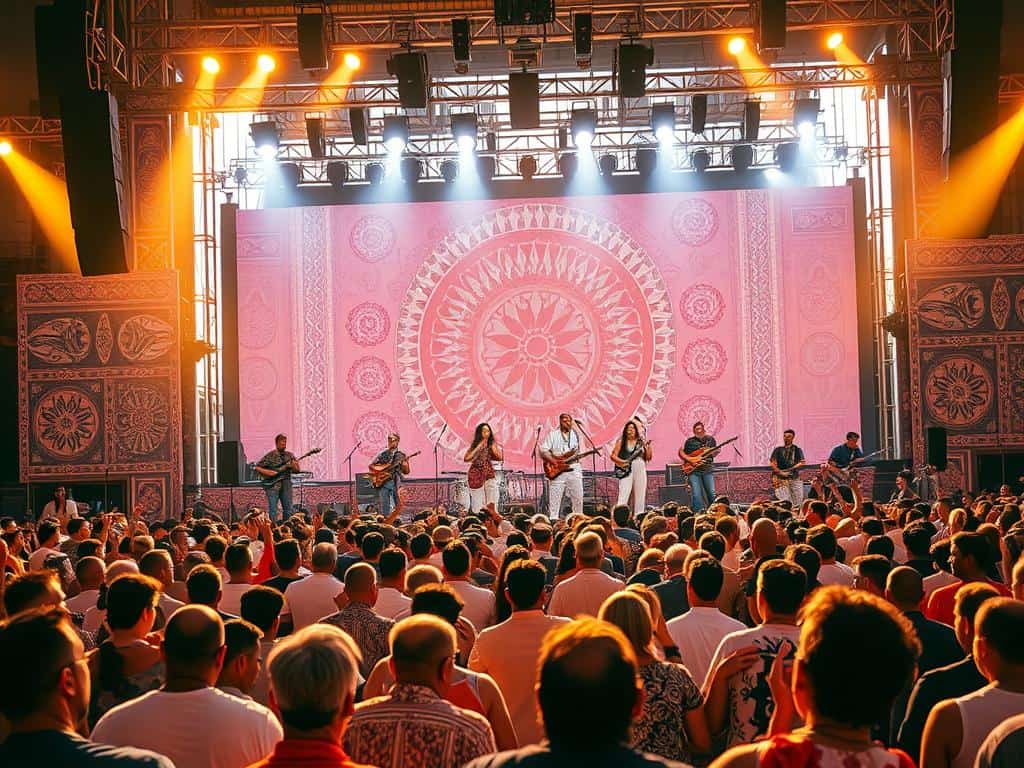
Nowadays, genres like hip-hop have grown into forms of advocacy and expression. Music today speaks to social issues, connects with people, and showcases cultural identities. Listening to artists from around the world, it’s clear how music fosters change, shapes our views, and brings people together.
Conclusion
Music reflects our cultural values, history, and dreams. It’s more than art. It’s how communities around the world share their stories. From old folk songs to today’s hits, music shows how cultures grow. It helps us see each other in a new light. This mix of sounds not only shows the variety in music but also the good that cultural sharing does.
Nowadays, keeping cultural traditions alive is key. We can celebrate different cultures by supporting their music and new artists. Local music programs and festivals help keep our cultural identities alive. They let the next generation understand and keep their unique stories.
Music has the power to connect us all. Understanding its deep roots helps us enjoy the many kinds of music we have. Let’s keep the music from all cultures going strong. This way, our shared stories can touch everyone, everywhere, always.