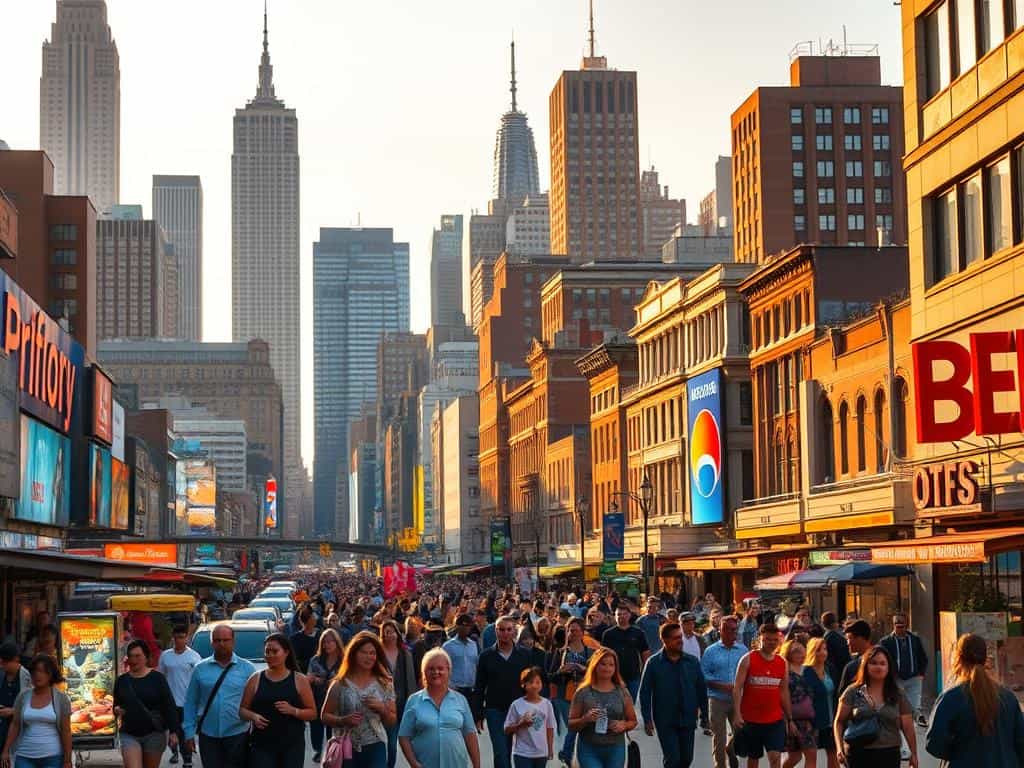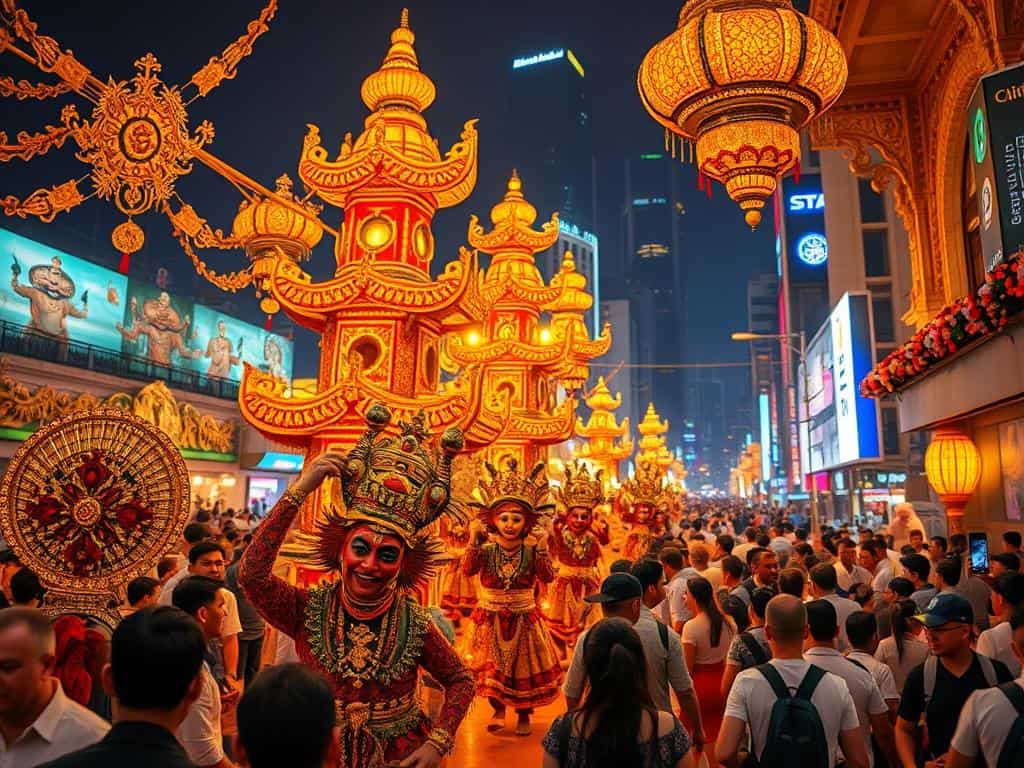
While exploring Thailand’s lively markets, I found a vivid celebration. It was full of life and colors. People wore fancy costumes, and colorful floats moved through streets. The smells of strange food filled the air. This festival showed the importance of special festivals. They bring people together and celebrate different cultures. These events, from the odd to the wild, enrich our lives. They encourage us to check out local festivals. Let’s look at world celebrations that are often unseen. They bring much joy and creativity.
Key Takeaways
- Unique festivals showcase the diversity of global festival culture.
- Bizarre celebrations can be deeply rooted in tradition or modern expression.
- Many local events offer rich cultural experiences worth exploring.
- Understanding these festivals helps us appreciate cultural differences.
- Participating in unusual celebrations can lead to unforgettable memories.
Exploring Unique Festival Culture
Festivals are a colorful mix of cultural backgrounds, blending history and social traditions. Each one tells a story, some going back hundreds of years. They show us the importance of celebrating in creating shared cultural values and experiences.
The Origins of Unique Festivals
Many festivals started with ancient customs or community events. They celebrated the changing seasons, religious events, or important historic moments. This linking of past and present enriches local culture, mixing memory and celebration.
Examples of Bizarre Celebrations
Some festivals worldwide might seem strange but are full of meaning. La Tomatina in Spain, for example, is a fun tomato fight that brings people together. These unusual traditions highlight the unique cultural backgrounds they come from, showcasing a world of diversity.
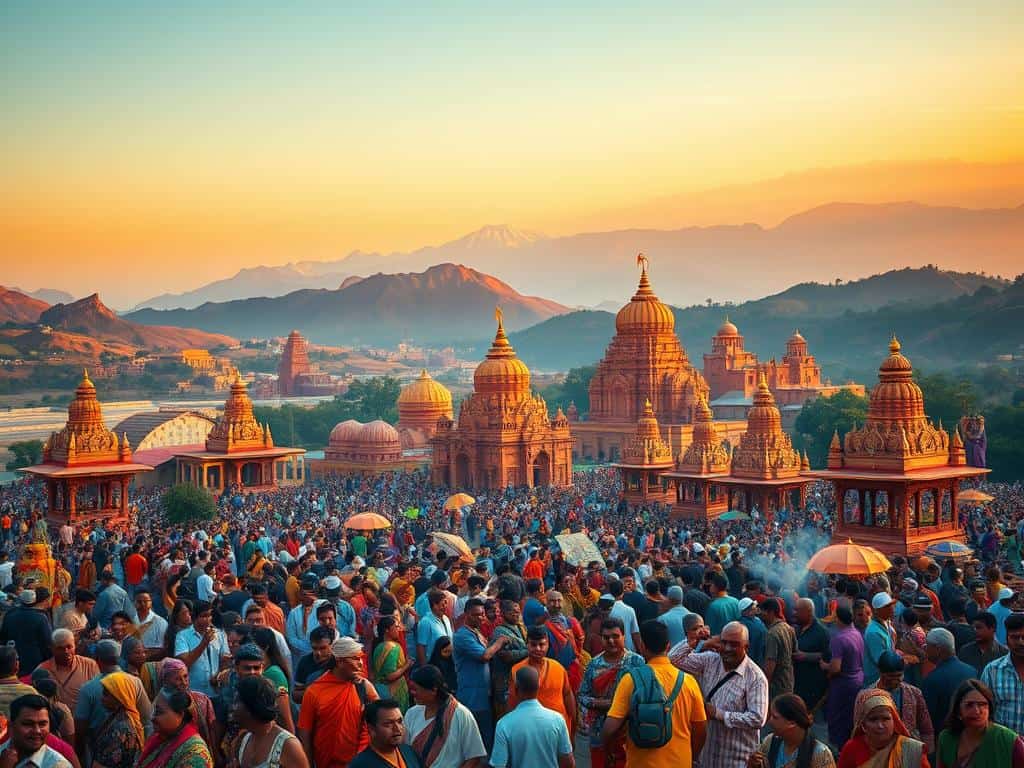
Must-Experience Unique Festivals Worldwide
Traveling the globe, we see some amazing celebrations. Las Bolas de Fuego in El Salvador is very special. The excitement and history make it an event to remember. It attracts both locals and tourists who want to experience El Salvador’s celebrations and culture.
Las Bolas de Fuego, El Salvador
Las Bolas de Fuego happens every August 31st in Nejapa. It marks the eruption of the El Playon volcano in 1658. This festival is a key part of the community’s heritage.
People wear skull-painted faces and throw kerosene-soaked fireballs at each other. It showcases the town’s spirit and the value of tradition in El Salvador.
Cheung Chau Bun Festival, Hong Kong
In Hong Kong’s Cheung Chau Island, the Bun Festival takes place each spring. It’s for wishing peace and safety for the island. Activities like bun-snatching and lion dances are a big draw.
This event helps the community bond and lets everyone appreciate unique festivals.
World Bodypainting Festival, Austria
The World Bodypainting Festival in Austria is about the art of body painting. Artists worldwide come to show off their skills. They compete in different categories.
This colorful event is a mix of art and performance. It draws a crowd and encourages artistic and cultural sharing.
Conclusion
Thinking about the ten festivals in this article, I’m struck by the world’s cultural diversity. Every festival shares a part of its community’s history and traditions. It shows how important it is to keep cultural heritage alive through joyful events. From the fiery excitement of Las Bolas de Fuego in El Salvador to the Cheung Chau Bun Festival’s charm, these festivals let me explore different cultures and shared emotions.
Being part of these festivals makes me see the world differently. It connects me with people globally. Worldwide, festivals remind us that we’re all connected. They invite us to celebrate the important moments of life together. Each festival is a celebration of tradition and the happiness that comes from being with others.
In the end, discovering different cultures through their festivals is enlightening. It shows that these events are not just for show; they express who we are and our ability to overcome challenges. By experiencing the variety of festivals, I grow more appreciative of the world’s cultural richness. It helps me understand the variety of ways people celebrate their unique identities.