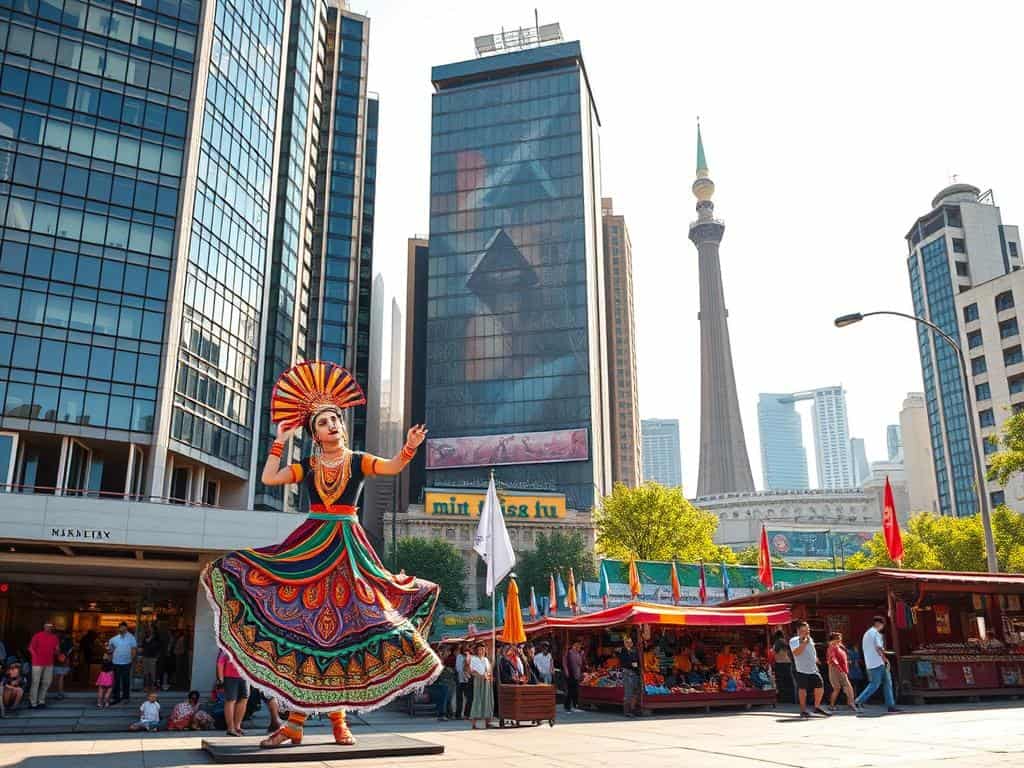
Walking through a bustling market in Bali, I was surrounded by its lively essence. The smell of traditional satay and the sound of Balinese music were everywhere. Yet, a store full of branded flip-flops and fast-food chains nearby seemed to push aside the local culture. This mix of global and local cultures made me think: Is globalization wiping out unique traditions? Are we heading towards a world culture that’s all the same?
The world is getting more connected, and it’s changing how we keep up with traditions. It’s vital to explore how globalization affects local ways of life. Might we lose important parts of our heritage forever? These questions highlight the need to protect and value our diverse cultures.
Key Takeaways
- Globalization can dilute local vs. global culture differences.
- Cultural loss threatens indigenous traditions and practices.
- Homogenization leads to a lack of diverse cultural experiences.
- Resistance and preservation efforts are crucial for maintaining heritage.
- Understanding the impact of globalization is essential to protect local identities.
The Rise of Global Culture
In recent years, globalization has greatly changed how cultures mix around the world. It’s not just about money; it’s also about how people live and interact. Getting to know globalization helps me see how different cultures blend and change each other.
Understanding Globalization
Globalization is a mix of forces that changes our world. Countries working closely together opens up new ways to work together and share. It’s all powered by technology, making it easy to swap cultural stories. When I explore content from around the world, I notice how media makes these exchanges louder. It leads to more cultural sharing but also makes us think about keeping cultures alive.
The Forces Driving Global Culture
Many things are making a global culture grow. Technology lets us quickly share what we think and how we live. Through media, I get to see new cultural trends from everywhere, affecting what I think and do. More trade between countries also plays a part, giving us all sorts of new things to try. As cultures meet more often, I see chances for rich exchanges but also the danger of forgetting our unique traditions.
Cultural Loss: A Byproduct of Globalization
The impact of globalization on local cultures is huge. It puts indigenous traditions at risk worldwide. As a global culture grows, unique local traditions face the danger of disappearing.
Consequences for Indigenous Traditions
Indigenous traditions are at the heart of cultural identity. But as globalization spreads, these legacies face threats. Languages, rituals, and customs of many indigenous communities are fading, replaced by global narratives. This leads to less diversity in cultural expressions.
Homogenization of Cultural Practices
The homogenization effect makes varied cultures more alike. This process doesn’t honor the details that make cultures unique. Places rich in local culture now mirror global trends, dulling the world’s cultural vibrancy.
Resistance and Preservation Efforts
Even with these challenges, there’s a pushback. People and groups work hard to protect their cultural heritage. Local activists and NGOs lead the fight to keep indigenous traditions alive. Their efforts show how vital it is to value cultural diversity as our world becomes more uniform.

Local vs. Global Culture
Local and global cultures collide, showing us new ways to view our world. Local culture is made up of unique languages, traditions, and history. On the flip side, global culture brings us together, cutting across places. This mix shapes who we are in deep, complex ways.
Identifying Key Differences
Local cultures thrive on what’s special about their places. They celebrate traditions that show what they value most. Global culture aims to connect us all, but sometimes, it can blur what makes each culture special. Understanding these differences helps us value what every culture offers to the world.
The Impact of Globalization on Local Identities
Globalization changes how we see our local identities. It pulls us towards a global way of life, sometimes making us lose touch with our roots. This struggle can make us feel lost among global trends. It’s a fine line between joining the global community and keeping our unique cultures alive.
Conclusion
When I think about global culture and local traditions, I see good and bad sides. Global culture brings people together, teaching us about each other. But it can also threaten the special things that make us different.
People everywhere are working hard to keep their traditions alive. This work is important because it keeps our world interesting and diverse. We need to find a way to enjoy global benefits while protecting local cultures. This balance can make our lives richer and save the uniqueness of communities.
It’s important to remember that global culture connects us, but our local traditions add depth to who we are. By caring about cultural preservation, we help unique cultures survive in a changing world. This is how we keep the stories and customs of different cultures going strong.