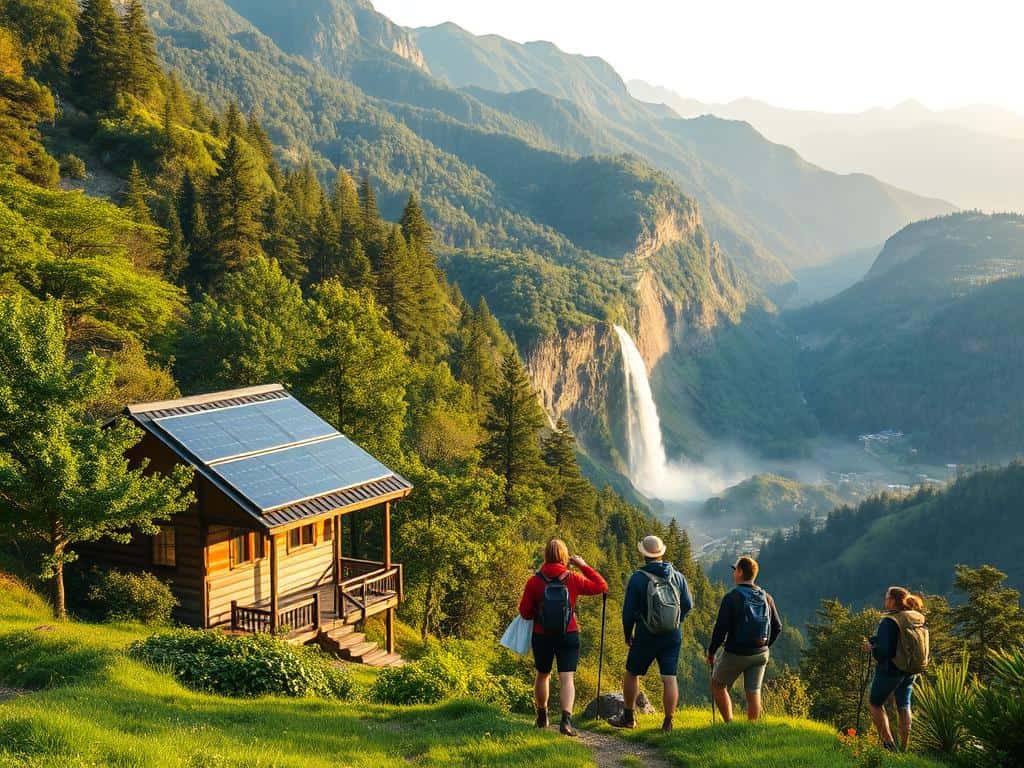
Standing on the edge of Costa Rica’s vibrant rainforest was an eye-opener. Each step was more than a stroll through beauty; it was a pledge to support sustainable travel. The jungle’s scent and distant howler monkeys made me feel like a privileged visitor in their stunning home. Motivated by my journey, I set out to find eco-friendly spots that are not just beautiful but also positive for the planet.
Today, as we crave green adventures, choosing destinations that care for the earth is crucial. Together, let’s journey through ten amazing places that embody eco-conscious travel. They offer incredible experiences and help make the world a better place.
Key Takeaways
- Eco-friendly travel destinations foster sustainability.
- Sustainable tourism is essential for preserving natural resources.
- Green travel benefits local communities and economies.
- Travelers can make a positive impact through their choices.
- Exploring nature-rich destinations enriches travel experiences.
- Understanding local cultures enhances the sustainable travel experience.
Why Eco-Friendly Travel Destinations Matter
Exploring the world has made eco-friendly travel destinations more important to me. I learn about sustainable tourism to make choices that are good for the planet. This way of traveling makes sure we meet today’s needs without hurting future generations’ chances to enjoy our world. By picking places that are eco-friendly, I help protect nature and encourage responsible travel habits.
Understanding Sustainable Tourism
Sustainable tourism aims to minimize harm to the environment and local people. It focuses on protecting nature and respecting local ways of life. Choosing to travel this way not only makes trips better but also helps the places I visit stay healthy and vibrant. It’s about making choices that match my values and look after the environment.
Impact of Travel on the Environment
The travel industry greatly affects our planet. Things like air travel emissions and waste in tourist areas have big impacts. Knowing this helps me make better choices. By choosing eco-friendly spots, I lower those negative effects. Even small actions, such as using less plastic or supporting local stores, can make a big difference in our favorite places.

Top Eco-Friendly Travel Destinations
For those looking to travel green, many places lead in sustainable tourism. These spots let you get close to nature, help with conservation, and have unforgettable trips with little harm to the environment. Let’s check out some of the top eco destinations you should visit.
Costa Rica: A Pioneer in Eco-Tourism
Costa Rica is a prime example of an eco-friendly destination. It uses over 99% renewable energy, setting high standards for sustainable tourism. You can explore stunning national parks and wildlife refuges, covering more than a quarter of the country. Eco-lodges and sustainable tours enhance your stay, letting you enjoy nature and support local conservation.
Iceland: Leading the Way in Renewable Energy
Iceland is known for its commitment to renewable energy, with almost all electricity coming from geothermal and hydro power. It offers sustainable tourism options like green accommodations and tours that show off its unique geysers and volcanoes.
New Zealand: A Commitment to Sustainability
New Zealand focuses on eco-friendly travel. Its amazing landscapes include mountains, beaches, and forests. The country promotes its natural beauty through conservation projects and eco-lodges, working to save its diverse wildlife.
Bhutan: The World’s Only Carbon-Negative Country
Bhutan is unique as the only carbon-negative country. It keeps tourism sustainable by limiting tourists and focusing on conservation. This approach lets travelers enjoy its rich culture and stunning nature in a responsible way.
Norway: A Green Transport Leader
Norway leads in green transport. It’s big on electric public transport and eco-friendly travel methods. Here, you can see beautiful fjords and the northern lights, while your travels help local communities.
Slovenia: Europe’s Greenest Country
Slovenia is a beautiful place with a strong commitment to sustainability, known as Europe’s greenest country. It encourages eco-tourism through its Green Scheme, offering great hiking, cycling, and green accommodations. You get to enjoy nature without harming it.
The Galápagos Islands: A Conservation Success Story
The Galápagos Islands are champions of conservation and eco-tourism. Their unique wildlife is protected by limiting tourists. Staying in eco-friendly places and joining guided tours helps keep these islands amazing and natural.
Kenya: Sustainable Safari Adventures
Kenya is famous for its safaris and wildlife, offering eco-friendly adventures. Its focus on conservation and community tourism lets you experience Africa’s wilderness responsibly. It’s impressive how destinations like Kenya balance wildlife protection with amazing nature trips.
Finland: A Hidden Sustainable Gem
Finland might be off the radar for some, but it’s committed to the environment. Its eco tourism includes forest hikes and canoe trips in clean lakes. Green accommodations and transport show the beauty of traveling responsibly.
Palau: A Small Nation with Big Conservation Impact
Though small, Palau has a big role in conservation. It’s all about sustainable tourism, with protected marine areas and green practices. Here, you can dive among stunning coral reefs and diverse sea life, helping to protect this incredible destination.
Conclusion
Reflecting on my travels to eco-friendly places shows me how important green tourism is. I’ve explored Costa Rica, Iceland, and Bhutan. They offer amazing sights and help me travel responsibly.
Every traveler can help protect our world. By choosing sustainable options, I help save cultural sites and natural areas. It’s about staying in eco-lodges, helping in conservation, and respecting animals. This makes my trips better and supports the places I visit.
I aim to travel in ways that protect our planet’s wonders and cultures. Our travel choices can have a positive effect. Together, we can make our journeys beneficial for the environment and for future travelers.